
1. Overview of the Motor Industry
As the “power heart” of modern industry, an electric motor is an electromagnetic device that converts or transmits electrical energy based on the law of electromagnetic induction. The motor industry chain is very broad. Upstream, it mainly includes suppliers of raw materials such as metal materials (electrolytic copper, silicon steel, carbon steel, etc.), insulating materials, magnetic materials, and electronic components, as well as suppliers of core components such as stators and rotors, bearings, and control systems. Midstream is the motor manufacturing process, and downstream applications are widespread, including mining, metallurgy, oil and gas, petrochemicals, automobiles, power generation equipment, home appliances, steel, chemicals, and building materials.
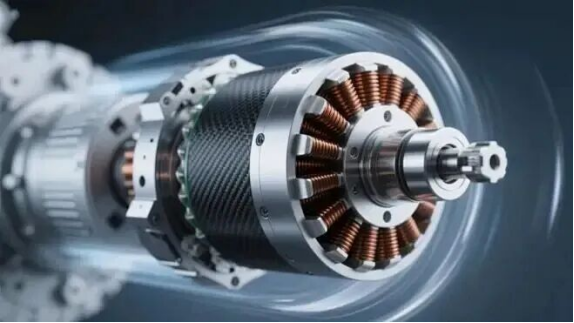
From a cost structure perspective, raw material costs account for 60%-70% of the total cost of a motor. In new energy vehicle motors, neodymium iron boron permanent magnets account for 30%-45% of raw material costs, silicon steel sheets for 15%-20%, enameled wire for 15%-25%, and aluminum alloys for 10%-15%. In industrial motors, electromagnetic materials (copper + silicon steel) account for 55%-60% of the total cost, structural components (frame + end caps) account for 18%-22%, and bearings and insulation materials account for 12%-15%.
The technological barriers in the industry chain are mainly reflected in several key links: First, high-performance silicon steel sheet technology. Thinner silicon steel sheets can significantly reduce eddy current losses, but require extremely high rolling technology and process requirements. Second, rare earth permanent magnet material technology, especially the preparation and performance optimization of heavy rare earth materials, involves complex processes such as the separation, purification, and magnetization of rare earth elements. Third, motor design and manufacturing processes, including dynamic balance precision control and the machining precision of rotating parts. Automated production lines require a dynamic balance precision level of G1.0, and the roundness error of rotating parts must be controlled within 0.8μm.
In recent years, China’s motor industry has seized the trend of global motor industry transfer, leveraging its advantages in labor and raw material costs, resulting in rapid industry development. In terms of technological evolution, the motor industry is moving towards high efficiency, energy saving, intelligence, and integration. Regarding high-efficiency energy saving technology, the improvement from IE3 to IE4 and IE5 energy efficiency levels has become the main theme of industry development. In terms of intelligent technology, integrated design of motors and drive control has become the mainstream product form, and the proportion of intelligent motors equipped with sensors and communication modules has reached 30% by 2025. The deep integration of AI and IoT technologies is driving motors towards “self-sensing, self-diagnosis, and self-optimization.” Future motors will have built-in AI chips, using machine learning to monitor equipment status in real time, predict faults, and automatically adjust operating parameters. Material technology innovation is also driving industry transformation. The hysteresis loss of amorphous alloy cores is only 1/5 that of silicon steel, reducing no-load losses by 60%-80%. In terms of permanent magnet materials, neodymium iron boron permanent magnets have enabled motor efficiency to exceed 97%, and grain boundary diffusion technology can reduce the use of heavy rare earth elements (dysprosium and terbium) by 30%-50%.
02 Industry Macroeconomic Environment Analysis
Global and China Market Size
The global motor industry is expected to undergo a structural transformation by 2025, with driving factors expanding from traditional industrial demand to three core areas: new energy, intelligentization, and high efficiency. According to multiple institutions’ forecasts, the global motor market size is projected to be between US$180 billion and US$195 billion in 2025, with a compound annual growth rate (CAGR) of approximately 5.8% to 6.9%. Among them, the global industrial motor market size is expected to exceed US$195 billion, with China accounting for 45% of global demand, becoming the core growth engine. China’s motor market performance is particularly outstanding, having become the world’s largest producer, consumer, and exporter of motors. According to the latest data, the Chinese motor industry market size is projected to exceed RMB 1.6264 trillion in 2025, a year-on-year increase of 11.7%, with a CAGR of approximately 6.2% to 8.5%. Looking at the segmented markets, the Chinese industrial motor market size is projected to reach RMB 450 billion in 2025, with high-efficiency energy-saving motors accounting for 45%. The new energy vehicle motor market is experiencing particularly rapid growth.
The global market size for new energy vehicle drive motor systems is projected to reach approximately RMB 285 billion by 2025, with the Chinese market accounting for over 65%, reaching nearly RMB 185 billion. The Chinese market is expected to grow at a year-on-year rate of 22%. The Chinese domestic drive motor market reached RMB 50.17 billion in 2024 and is projected to exceed RMB 60 billion in 2025, representing a CAGR of 45%. The servo motor market is also maintaining rapid growth. The Chinese servo motor market size is projected to exceed RMB 38 billion by 2025, with the general-purpose servo market expected to reach RMB 21.9 billion and the dedicated servo market expected to reach RMB 6 billion. From 2025 to 2030, the Chinese servo motor industry market size is projected to grow from RMB 62.3 billion in 2025 to RMB 102.8 billion in 2030, representing a CAGR of 10.5%.
Policy Environment Analysis
The policy environment for the motor industry in 2025 is characterized by “upgraded standards, policy support, and stricter regulation.”
Regarding energy efficiency standards, several new national standards will be officially implemented in 2025, marking the Chinese motor industry’s full entry into the “IE5 era.” GB 30253-2024, “Minimum Allowable Values of Energy Efficiency and Energy Efficiency Grades for Permanent Magnet Synchronous Motors,” will be officially implemented on October 1, 2025, fully replacing the 2013 version and raising the first-level energy efficiency threshold for permanent magnet synchronous motors to IE5. GB 30254-2024, “Minimum Allowable Values of Energy Efficiency and Energy Efficiency Grades for High-Voltage Three-Phase Squirrel-Cage Asynchronous Motors,” will be officially implemented on September 1, 2025, further tightening the energy efficiency limits and raising the minimum energy efficiency requirements to international advanced levels.
Regarding industrial policies, the “Industrial Energy Efficiency Improvement Action Plan” clearly states that by 2025, the proportion of newly added high-efficiency energy-saving motors should reach over 70%, and the proportion of newly added high-efficiency energy-saving transformers should reach over 80%. The “Electric Motor Energy Efficiency Improvement Plan (2023-2025)” requires that by 2025, the annual output of high-efficiency energy-saving motors reach 350 million kilowatts, accounting for more than 70% of the domestic total output. Local governments have also introduced corresponding support policies. For example, the “Implementation Rules for Special Support for the Renewal of Energy-Consuming Equipment in Industrial and Communication Sectors” issued by Shanghai stipulates that the purchase of Level 1 energy-efficiency motors can receive subsidies of 120 yuan/kW (rated power ≤ 22kW) or 90 yuan/kW (rated power > 22kW), while Level 2 energy-efficiency motors can receive subsidies of 60 yuan/kW or 45 yuan/kW. Fujian Province supports the supply and demand matching and market promotion activities for motors and electrical appliances led by the Ministry of Industry and Information Technology, and provides financial support as stipulated.
In the field of new energy vehicles, policy support continues to increase. The “New Energy Vehicle Industry Development Plan (2021-2035)” sets a target of new energy vehicle sales reaching about 20% of total new vehicle sales by 2025 (in reality, it exceeded 36.7% in 2023, and is expected to exceed 50% in 2025). The “Special Action Plan for Breakthroughs in Core Component Technologies for New Energy Vehicles” clearly states the goal of achieving a drive motor system efficiency of over 97% and a power density of 5.5 kW/kg by 2025.
Market Competition Landscape
The global and Chinese competitive landscape of the global motor market exhibits a three-tiered structure.
The first tier consists of international giants from Europe, America, and Japan, including Siemens, ABB, Bosch, Nidec, and Toshiba Industries. These companies dominate the high-end precision motor sector, possessing advanced technology and brand advantages.
The second tier comprises leading Chinese companies such as Wolong Electric Drive, Dayang Motor, and Jiangte Motor, which have already captured 38.7% of the market share. They have built a technological moat through vertical integration of the rare earth permanent magnet material supply chain and horizontal expansion of motor control systems.
The third tier comprises numerous small and medium-sized enterprises, primarily competing in the low-to-mid-end market. The Chinese motor market exhibits a pattern of “domestic companies dominating, with foreign companies penetrating the high-end market.”
In 2023, domestic companies held approximately 94% of the overall Chinese motor market share, while foreign companies held approximately 6%. European and American companies accounted for about 3.6%, and Japanese companies for about 2.3%. Looking at specific market segments, foreign companies held relatively high market shares primarily in low-voltage motors and AC motors. In the low-voltage motor market, foreign companies held approximately 5.7% of the market share (compared to 3.8% for European and American companies and 1.9% for Japanese companies), and in the AC motor market, they held approximately 4.9% (compared to 3.7% for European and American companies and 1.2% for Japanese companies).
Regarding market concentration, the overall concentration of China’s motor industry is relatively low but showing an upward trend. In 2023, the top 10 motor companies in China held approximately 24% of the market share. Wolong Electric Drive had the highest market share, with annual motor sales of approximately RMB 13 billion, representing about 6.2% of the market. This was followed by Dayang Electric (RMB 9.2 billion, 4.4%), Shanghai Electric (RMB 6.2 billion, 2.9%), and Huichuan Technology (RMB 5.8 billion, 2.8%), among others. Within the segmented market, the high-voltage motor market has a relatively high concentration, with the top 10 motor companies holding approximately 30% of the market share. The DC motor market has a lower concentration, with the top 10 companies holding approximately 10% of the market share. From a competitive perspective, industry concentration continues to increase.
The CR10 concentration of the industrial motor sector is projected to rise from 63% in 2025 to 71% in 2030. The low-voltage motor market concentration increased from 52% in 2018 to 67% in 2023. The CR10 of the AC motor manufacturing market is expected to steadily increase from approximately 38.5% in 2024 to around 52% in 2030.
03 High Value-Added Motor Market
High value-added segments in the motor industry are mainly concentrated in sub-sectors with high technological barriers, high gross profit margins, and strong market demand growth: the servo motor sector exhibits significant high value-added characteristics. Data shows that semiconductor manufacturing servo motors have a gross profit margin of 40%-45% and a net profit margin of 15%-18%, driven by a 30% increase in equipment investment and high technological barriers; high-end industrial robot servo motors have a gross profit margin of 35%-40% and a net profit margin of 12%-15%, supported by a 60% increase in high-end demand. Huichuan Technology’s servo motor gross profit margin reaches 38.2%, significantly higher than the company’s overall gross profit margin.
New energy vehicle drive motors are another high value-added area. The average gross profit margin of new energy vehicle motor companies is 30%, higher than the 24% of industrial motor companies and the 20% of home appliance motor companies. Within new energy vehicle motors, the gross profit margins of robot power system products—motors (including modules)—are 63.67%, 65.40%, and 61.66%, respectively, maintaining a relatively high and stable level.
Special motors and high-efficiency energy-saving motors also possess high value-added characteristics. Jiadian’s nuclear power products achieved a gross profit margin of 37.9%, 15 percentage points higher than its traditional motor business. This technological advantage continues to generate value in core products such as the main helium blower for high-temperature gas-cooled reactors and nuclear-grade motors, driving the gross profit margin to be 8-10 percentage points higher than the industry average for three consecutive years.
System integration and solutions represent the value chain upgrade direction of the motor industry. International giants such as Siemens and ABB are accelerating their deployment of digital twin and predictive maintenance technologies through mergers and acquisitions, providing overall solutions from “motor + drive + service”. For example, Denco’s “nexofox” IIoT brand provides customers with a comprehensive solution portfolio covering all aspects of smart motor use and networking, including value-added services such as digital twin services.
Rare earth permanent magnet materials, as key raw materials, have high technological barriers and added value. The preparation process of rare earth permanent magnet materials is complex, involving multiple steps such as the separation, purification, and magnetization of rare earth elements, requiring extremely high standards for process control and material performance. The core requirements for high-performance neodymium iron boron magnets, such as a magnetic energy product of over 50 MGOe and a coercivity exceeding 20 kOe, force companies to master core technologies such as microstructure control and heavy rare earth reduction.
04 Future Market Demand
Industry Development Opportunities: The motor industry is facing multiple development opportunities, providing strong momentum for enterprise growth.
Policy-Driven Replacement Demand:The implementation of the new national standard in 2025 will drive a comprehensive upgrade of motor energy efficiency, bringing a huge replacement market. According to policy requirements, by 2025, the proportion of newly added high-efficiency energy-saving motors must reach over 70%, resulting in a huge demand for the replacement and upgrading of existing inefficient motors. Taking Shanghai as an example, purchasing a Level 1 energy efficiency motor can receive a subsidy of 120 yuan/kW, directly reducing the replacement costs for enterprises.
Explosive Growth of the New Energy Vehicle Industry: Sales of new energy vehicles are expected to exceed 12 million units in 2025. Each vehicle requires a motor, bringing a market opportunity worth hundreds of billions of yuan. In particular, the widespread adoption of the 800V high-voltage platform will drive the value of motors from 5,000 yuan to 12,000 yuan, significantly increasing the value per vehicle.
Intelligent Manufacturing Upgrade Demand:The advancement of Industry 4.0 and intelligent manufacturing is driving rapid growth in demand for servo motors and industrial robots. The market size of China’s robot servo motor and drive industry is projected to reach 21.05 billion yuan by 2025, with the localization rate expected to exceed 55%.
Expanding into emerging application areas: Humanoid robots: With the advancement of products such as Tesla’s Optimus and Xiaomi’s CyberOne, the demand for dedicated motors for humanoid robots is booming, with a single robot requiring dozens of joint motors. Energy storage systems: The rapid growth in installed capacity of new energy storage is driving demand for energy storage motors. Medical devices: High-end medical equipment such as surgical robots and rehabilitation equipment is increasing the demand for precision motors. Aerospace: Emerging fields such as electric aircraft and drones are bringing incremental demand.
Value enhancement brought by technological upgrades: High-efficiency energy-saving technology: IE5 energy efficiency motors are 3% more efficient than IE3, saving thousands of kilowatt-hours of electricity annually, bringing significant economic benefits. Intelligent technology: Intelligent motors can reduce the failure rate by 25% through predictive maintenance, reducing maintenance costs. New material applications: Breakthroughs in technologies such as amorphous alloys and new permanent magnet materials are improving motor performance and efficiency.
05 Development Trend Analysis
As the “power heart” of modern industry, the motor industry is at a critical juncture, transitioning from traditional manufacturing to intelligent manufacturing and from scale expansion to value enhancement.
In 2025, the market size of China’s motor industry is projected to exceed 1.6264 trillion yuan, a year-on-year increase of 11.7%, maintaining a steady growth trend. In terms of industry structure, domestic companies have already captured 94% of the market share, breaking the monopoly of foreign companies, but there is still room for improvement in the high-end market. Industry concentration continues to increase, with the CR10 rising from 34% in 2020 to an estimated 55% or more in 2025. Leading companies are consolidating their competitive advantages through technological innovation, supply chain integration, and globalization. From a technological development perspective, high efficiency, energy saving, intelligence, and integration have become the main themes of industry development. The implementation of the IE5 energy efficiency standard has driven a comprehensive upgrade of the industry, with the proportion of intelligent motors equipped with sensors and communication modules reaching 30%, and AI technology beginning to be applied in motor systems. Emerging application areas such as new energy vehicles, industrial robots, and humanoid robots are bringing new growth momentum to the industry.
The motor industry will exhibit new development characteristics in the following aspects:
Industry concentration will further increase. With rising technological barriers and the emergence of economies of scale, it is projected that by 2030, the industry’s CR10 (top 10 companies’ market share) will exceed 70%, forming a competitive landscape dominated by a few large enterprises. Small and medium-sized enterprises (SMEs) will need to seek survival through strategies such as differentiated competition and breakthroughs in niche markets.
Technological innovation will become the core competitiveness. High-efficiency energy-saving technologies will evolve from IE5 to higher energy efficiency levels; intelligent technologies will achieve a leap from monitoring to prediction, and from single machines to systems; and the application of new materials will bring revolutionary performance improvements. Enterprises need to continuously increase R&D investment, especially in key technology areas such as basic materials, core algorithms, and chips to achieve breakthroughs.
Application areas will continue to expand. In addition to traditional industrial and home appliance sectors, emerging fields such as new energy vehicles, energy storage, humanoid robots, and the low-altitude economy will become important growth points for motor demand. In particular, the explosive growth of the humanoid robot industry will bring a market opportunity worth hundreds of billions of yuan to precision motors.
Globalization will accelerate. Chinese motor companies will accelerate their globalization efforts through technology export, standards setting, and overseas mergers and acquisitions. Countries along the Belt and Road Initiative will become important market growth points, and Chinese enterprises need to enhance their international competitiveness and brand influence.
Business models will continue to innovate. The transformation from single-product sales to “product + service,” from equipment suppliers to solution providers, and from one-off transactions to full lifecycle services will become important trends in industry development. Enterprises need to build new business models to improve customer loyalty and profitability.
Overall, the motor industry is ushering in a historic development opportunity. Driven by multiple factors such as policy support, technological progress, and upgrading demand, the industry will maintain a sustained growth trend. For investors, it is recommended to focus on leading enterprises with advanced technology, a solid market position, and global capabilities, as well as innovative enterprises with breakthroughs in niche markets and high growth potential. For industry practitioners, it is necessary to grasp technological development trends, strengthen innovation capabilities, actively expand into emerging markets, and occupy a favorable position in the industry transformation.

